
Revised 18 October 2026; first published 2025-05-23. Original byline and URL retained.
Bread composition and digestive symptoms are different outcomes. A product survey can measure components in a sample; a clinical study must test how specified breads affect its participants.
No bread style guarantees an individual response
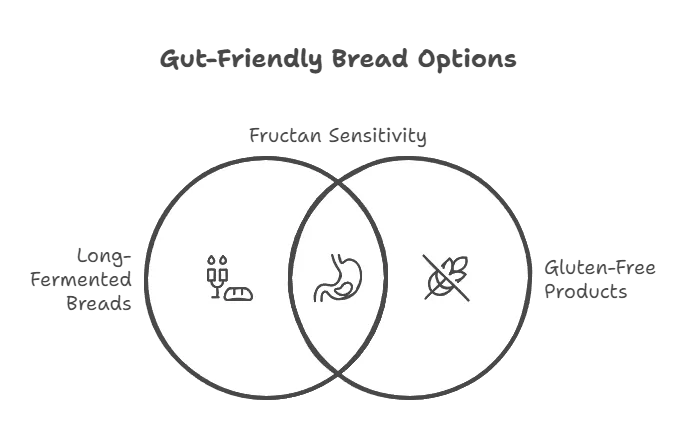
Ciabatta made from wheat contains gluten. Some people also study fructans, fermentable carbohydrates in wheat, as possible contributors to symptoms. Those are different substances, and a bread’s fermentation or handling method alone cannot predict how a person will respond.
The published evidence is specific to the breads, recipes, fermentation conditions, and participants tested. In randomized comparisons involving people with self-reported non-coeliac wheat sensitivity, group-level gastrointestinal symptom scores did not significantly differ among the tested wheat species and fermentation conditions. This does not establish an individual response or a result for every ciabatta.
What process notes can show
A baker can document flour, culture or yeast, fermentation time and temperature, hydration, handling, and measured loaf characteristics. Claims about tolerance or health need evidence that directly tests those outcomes; they should not be inferred from an open crumb or a folding schedule.