
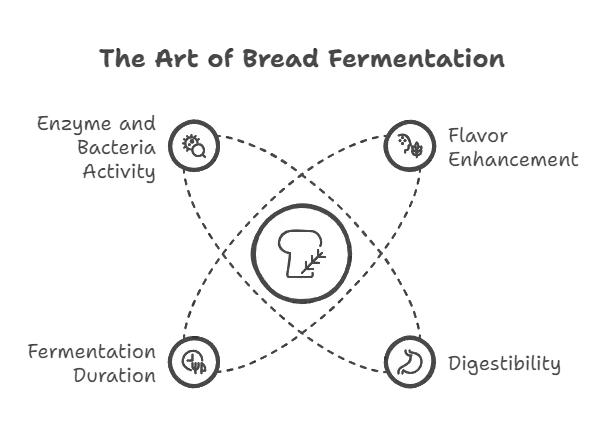
Revised 18 October 2026; first published 2025-01-18. Original byline and URL retained.
Baking combines sensory judgement with measurable conditions. A baker can weigh flour and water, record fermentation, and observe the dough; health claims require evidence that measures a health outcome.
What the name does not tell you
“Ciabatta” describes a style of wheat bread, not a complete nutrition or health profile. Flour type, recipe, serving size, and the rest of a person’s diet matter. A bread should not be described as healthier for everyone based only on its shape, fermentation label, or artisan production.
The 2022 comparison of 48 breads from Spain found substantial variation in measured gluten and fructan content. Long-fermented artisan breads in that sample had lower average gluten and higher average fructans than short-fermented supermarket breads. Those measurements are product composition findings, not proof that one category is healthier or more digestible.
A baker’s lens
For craft, focus on the formula and process: flour and water proportions, fermentation, dough development, shaping, and bake. Those details explain how the loaf is made. They do not support medical promises about digestion or health.